Affinity Resin Selector
Find the perfect Ecolab
resin for your monoclonal
antibody purification needs.

Find the perfect Ecolab
resin for your monoclonal
antibody purification needs.
As a global leader in resin technology, we develop and manufacture small beads that are used in the most regulated industries in the world to separate, remove or recover very specific elements and compounds.
Learn More
With 40 years of manufacturing expertise and 30 years of regulatory experience, we supply leading separation, purification and extraction technologies to support chromatography applications within the Pharma and Medical space.
Learn more
We are a world leader in resin-based separation, purification and extraction technology, that provides sustainable solutions for our environment, businesses and healthcare.
Learn More
Only approximately five percent of lithium batteries are recycled. Most of these undergo a smelting process, which consumes significant energy, burns off valuable battery components and produces harmful environmental pollutants.
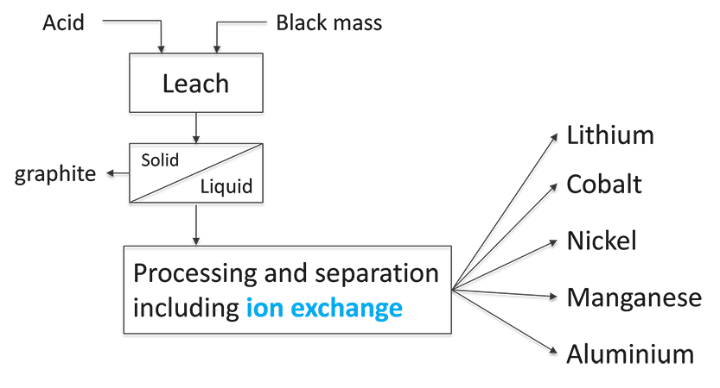
Because of this, new methods of recycling lithium batteries are currently being developed and tested. The first step in these new processes is to crush the battery and separate the plastics and metals to produce a black mass containing graphite and metal salts such as cobalt, nickel, manganese, and iron. This material is subjected to various processing steps to isolate the components into high-purity, battery-grade nickel sulfate, cobalt sulfate and lithium carbonate.
Purolite’s ion exchange resins can advance these developing processes with a range of technologies that can both remove impurities and target key battery metals to be recycled.
Our experts understand the importance of prolonging the lithium battery lifecycle through advancements in recycling methods. As the electric vehicle (EV) market expands rapidly, the demand for recycling technologies will also increase significantly. Our team and products can support these development efforts to ensure efficient removal methods and limit environmental waste.
Please contact us to learn how ion exchange can support your battery recycling efforts.
Chelation Resins
Solvent Impregnated Resins